The fusion of artificial intelligence and storytelling has opened unprecedented possibilities for content creation. Writers, game developers, and entertainment platforms are now exploring how AI can transform narrative experiences into deeply personalized journeys that adapt to individual preferences and behaviors.

This technological revolution isn’t just changing how stories are told—it’s fundamentally reshaping the relationship between creators and audiences. As AI systems become more sophisticated, they’re enabling infinite narrative variations that would be impossible for human writers to create alone, while maintaining coherence, emotional depth, and engagement throughout the experience.
🎭 The Evolution of Interactive Storytelling
Traditional storytelling has always been a linear experience, with authors crafting predetermined paths for readers or viewers to follow. The introduction of “choose your own adventure” books in the 1980s represented an early attempt at branching narratives, but these were severely limited by the practical constraints of physical media. Video games expanded these possibilities, creating complex decision trees that could lead to multiple endings based on player choices.
However, even the most sophisticated game narratives remained fundamentally limited by the finite number of scenarios developers could manually script. Enter artificial intelligence—a technology capable of generating contextually appropriate narrative content in real-time, responding to user decisions in ways that feel organic rather than predetermined. This shift represents a quantum leap from branching narratives to truly dynamic storytelling ecosystems.
How AI Transforms Narrative Creation 🚀
AI-assisted narrative systems leverage advanced language models trained on vast collections of literature, scripts, and dialogue. These systems don’t simply randomize story elements; they understand narrative structure, character development, emotional pacing, and thematic coherence. When a user makes a choice or expresses a preference, the AI can generate subsequent story beats that feel intentional and consequential.
The technology works through several interconnected components. Natural language processing allows the system to understand user inputs, whether they’re selecting from predetermined choices or typing free-form responses. Character modeling maintains consistency in how virtual characters behave, remember, and evolve based on their interactions with the user. Plot generation algorithms ensure that stories maintain narrative tension, pacing, and satisfying dramatic arcs even as they branch in unpredictable directions.
Key Technologies Powering AI Narratives
Large language models form the foundation of modern AI storytelling systems. These neural networks have been trained on billions of words, learning the patterns and structures that make narratives compelling. They can generate dialogue that sounds natural, descriptions that evoke vivid imagery, and plot developments that follow logical causality while still surprising users.
Memory systems allow AI narratives to maintain continuity across extended experiences. The system remembers what users have done, what characters they’ve met, and what plot threads remain unresolved. This creates a sense of persistence and consequence that’s essential for immersive storytelling.
Emotion recognition and sentiment analysis enable the AI to gauge user responses and adjust the narrative accordingly. If a user seems disengaged, the system might introduce a dramatic twist or shift to more action-oriented content. If they’re deeply invested in character relationships, the AI can emphasize interpersonal dynamics.
Personalization at Unprecedented Levels 🎯
The true power of AI-assisted narratives lies in their ability to tailor experiences to individual users in ways that go far beyond simple customization options. Traditional personalization might allow users to choose their character’s appearance or select difficulty levels, but AI personalization adapts the very fabric of the story itself.
Consider how different users might experience the same starting scenario. One person who demonstrates interest in political intrigue might find their story evolving into a complex web of alliances and betrayals. Another who shows preference for exploration and discovery could see the narrative shift toward uncovering ancient mysteries. A third user interested in personal relationships might experience a character-driven drama that emphasizes emotional connections.
Learning User Preferences Over Time
Advanced AI narrative systems don’t just react to immediate choices—they build comprehensive profiles of user preferences across multiple sessions. The system learns whether you prefer slow-burn character development or rapid-fire action sequences, complex moral dilemmas or straightforward heroic journeys, humor or drama, fantasy or realism.
This learning happens subtly and continuously. The AI tracks not just explicit choices but also engagement metrics: which scenes users spend more time with, which dialogue options they select most frequently, where they show signs of losing interest, and what types of content generate the strongest emotional responses.
Applications Across Entertainment Media 🎬
The entertainment industry is rapidly adopting AI-assisted narrative creation across multiple platforms. Video games represent the most obvious application, where developers are using AI to create living, breathing worlds that respond to player actions in increasingly sophisticated ways. Instead of exhaustively scripting every possible interaction, developers can establish narrative frameworks and character parameters, letting AI generate appropriate responses dynamically.
Streaming platforms are experimenting with interactive shows and movies that use AI to create personalized viewing experiences. Rather than simply choosing between predetermined branches, viewers might experience subtle variations in dialogue, scene emphasis, or even plot developments based on their viewing history and expressed preferences.
Literary Experiences Reimagined
Digital publishing platforms are exploring AI-generated novels and stories that evolve based on reader interaction. These aren’t traditional ebooks—they’re living narratives that might extend indefinitely, with new chapters generated as readers progress. Some platforms allow readers to influence story direction through feedback, creating collaborative storytelling experiences between human readers and AI systems.
Educational applications are using AI narratives to create immersive learning experiences where students become active participants in historical events or scientific discoveries. These educational narratives adapt to individual learning styles and paces, making complex subjects more engaging and memorable.
Creating Truly Immersive Experiences 🌐
Immersion requires more than just personalization—it demands consistency, believability, and emotional resonance. AI-assisted narratives excel at creating these qualities because they can maintain vast amounts of detail that would overwhelm human creators. Every character remembers past interactions, every location maintains consistent geography, and every plot thread eventually connects to the larger narrative tapestry.
Voice synthesis technology allows AI characters to speak with distinctive voices and speech patterns, further enhancing immersion. Combined with natural language understanding, users can have genuine conversations with virtual characters rather than selecting from limited dialogue trees. These conversations feel spontaneous and natural because the AI generates responses in real-time based on context and character personality.
Environmental Storytelling Enhanced by AI
AI doesn’t just generate dialogue and plot—it can create rich environmental details that make fictional worlds feel lived-in and authentic. Descriptions of locations can vary based on time of day, weather, season, and previous events. Background characters have their own routines and concerns. News and rumors spread through virtual communities in organic ways.
This level of detail creates worlds that feel genuinely alive rather than static backdrops for user actions. When users return to locations after extended absences, they might find things have changed in logical ways based on world events and the passage of time.
The Creative Partnership Between Humans and AI 🤝
Despite AI’s impressive capabilities, the most successful narrative experiences emerge from collaboration between human creativity and artificial intelligence. Human writers establish the core vision, themes, and emotional touchstones that give stories their soul. They create compelling characters, design meaningful conflicts, and craft the narrative frameworks that guide overall story structure.
AI handles the exponential complexity of branching possibilities, generating contextually appropriate content that honors the human creator’s vision while adapting to individual user choices. This division of labor allows human creators to focus on what they do best—crafting meaningful artistic experiences—while AI manages the technical challenge of personalizing those experiences for millions of individual users.
Tools Empowering Creator Communities
Numerous platforms now offer AI-assisted narrative creation tools that don’t require extensive programming knowledge. These systems provide intuitive interfaces where creators can define characters, establish world rules, outline plot frameworks, and specify thematic elements. The AI then uses these parameters to generate specific content that remains true to the creator’s vision.
Some platforms have developed community ecosystems where creators share templates, character models, and narrative frameworks. Users can remix and build upon each other’s work, creating vast libraries of AI-powered narrative experiences across every conceivable genre and style.
Challenges and Ethical Considerations ⚖️
The rise of AI-assisted narratives raises important questions about authorship, creativity, and the nature of storytelling itself. When an AI generates substantial portions of a narrative experience, who owns the resulting content? How do we credit creative contributions when they emerge from complex interactions between human frameworks and artificial generation?
Quality control presents another significant challenge. While AI can generate enormous quantities of content, ensuring that all generated material meets quality standards requires careful system design and ongoing refinement. Poor AI-generated content can break immersion and undermine user engagement faster than any other element.
Maintaining Narrative Coherence
As narratives branch and evolve based on user choices, maintaining logical consistency becomes increasingly complex. AI systems must track countless variables and ensure that generated content doesn’t contradict established facts or character traits. While modern systems handle this remarkably well, occasional inconsistencies can still emerge, particularly in extended narratives with complex branching structures.
Developers address this through sophisticated constraint systems that define boundaries within which the AI can generate content. These constraints ensure that while specific details may vary, core narrative logic remains intact regardless of which path users take through the story.
The Future of Personalized Storytelling 🔮
As AI technology continues advancing, the line between pre-authored and dynamically generated content will blur further. Future systems might create entirely unique narratives for each user, with no two people ever experiencing exactly the same story. These experiences could span years, evolving alongside users’ lives and incorporating real-world events and personal milestones into fictional narratives.
Multi-modal experiences will integrate text, voice, video, and virtual reality, creating narratives that engage all senses. AI will generate not just words but also images, sounds, and interactive environments that adapt in real-time to user actions and preferences. The distinction between consumer and creator will continue dissolving as users gain more agency to shape their narrative experiences.
Integration with Emerging Technologies
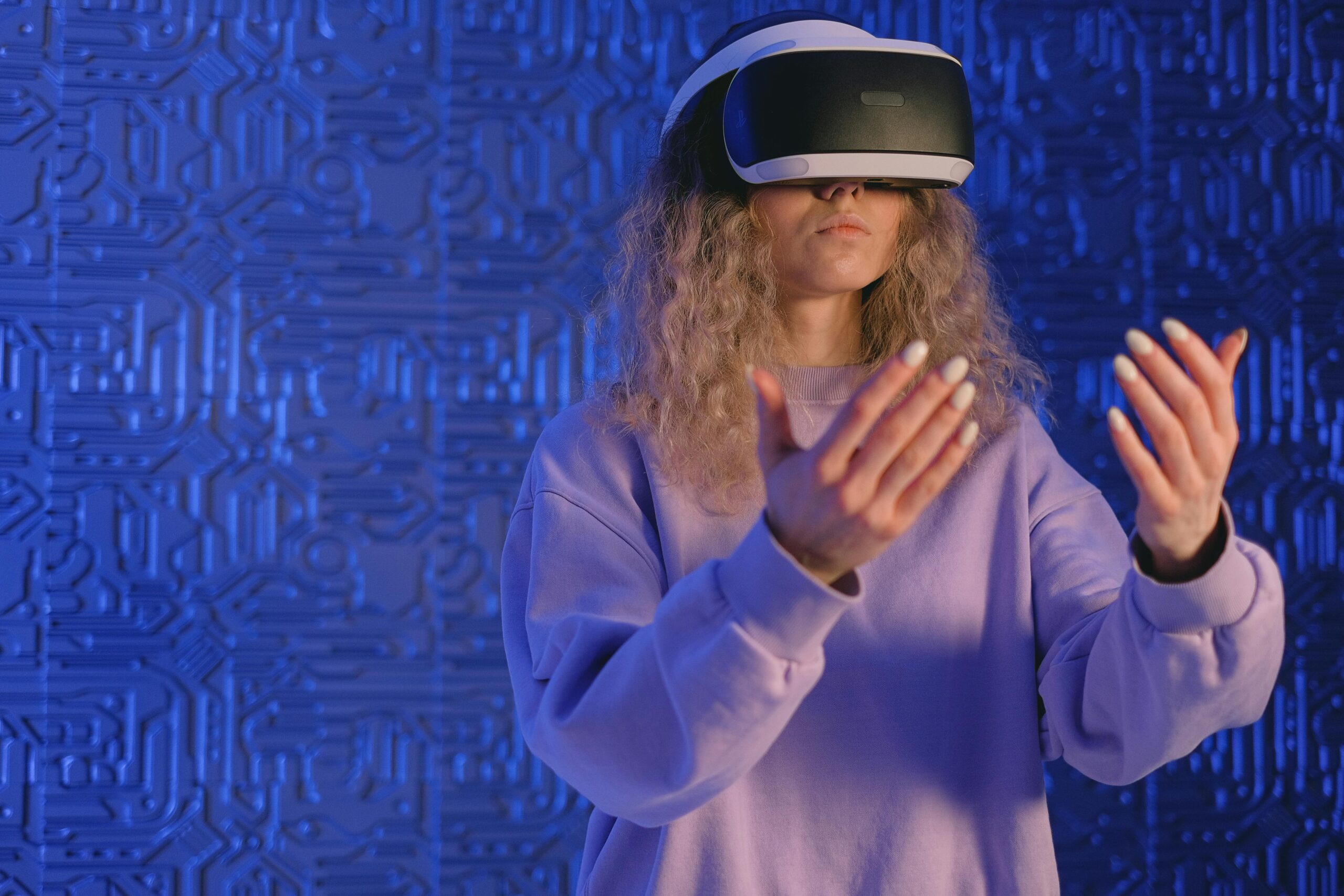
Virtual and augmented reality will transform AI narratives from screen-based experiences into fully immersive environments. Users might step into story worlds as virtual avatars, interacting with AI characters through natural movements and speech. These experiences could blur the boundaries between gaming, social interaction, and traditional entertainment.
Blockchain technology may enable persistent narrative universes that exist across multiple platforms and experiences. Character development, relationship dynamics, and story progress could carry over between different games, apps, and experiences, creating continuous narrative threads that follow users throughout their digital lives.
Practical Implementation for Creators 💡
For creators interested in exploring AI-assisted narrative creation, several approaches offer accessible entry points. Many game engines now include AI narrative tools as built-in features or available plugins. These systems range from simple dialogue generators to sophisticated narrative engines capable of managing complex branching storylines.
Cloud-based AI platforms provide API access to powerful language models that can be integrated into custom applications. These services handle the computational complexity of AI generation while giving creators control over narrative parameters and content filtering. Cost-effective pricing models make these technologies accessible even for independent creators and small studios.
Starting small represents the most practical approach for creators new to AI narratives. Rather than attempting to build vast, infinitely branching story universes immediately, focus on specific scenarios or character interactions. As you develop understanding of how AI systems respond to different prompts and constraints, gradually expand the scope and complexity of your narrative designs.
Measuring Success in AI-Driven Narratives 📊
Traditional metrics for narrative success—completion rates, user ratings, replay value—remain relevant for AI-assisted experiences, but new metrics emerge as well. User engagement depth measures how fully users explore available narrative branches. Personalization effectiveness tracks how well the AI adapts to individual preferences. Character relationship metrics assess the emotional connections users form with virtual characters.
Analytics systems designed specifically for AI narratives provide creators with insights into how users interact with their experiences. These tools reveal which narrative branches prove most engaging, where users typically disengage, and how effectively the AI maintains coherence across different story paths. This data enables continuous refinement and improvement of narrative systems.

Embracing the Infinite Possibilities ✨
AI-assisted narrative creation represents more than technological innovation—it embodies a fundamental shift in how we conceive of storytelling itself. Rather than single, unchanging narratives consumed passively, we’re moving toward living story ecosystems that adapt, evolve, and respond to individual participants. These systems don’t replace human creativity; they amplify it, enabling creators to build narrative frameworks that can generate meaningful experiences for millions of unique individuals.
The democratization of these tools means that creating sophisticated, personalized narrative experiences no longer requires massive development teams or Hollywood budgets. Independent creators, educators, artists, and storytellers across all disciplines can harness AI to bring their creative visions to life in ways that would have been impossible just years ago.
As we stand at this intersection of artificial intelligence and narrative art, the possibilities genuinely approach infinite. Every user becomes the protagonist of their own unique story, every playthrough offers new discoveries, and every interaction contributes to an ever-expanding universe of narrative possibilities. The future of storytelling isn’t about replacing human creativity with artificial generation—it’s about partnership, where human vision and artificial capability combine to create experiences more personal, immersive, and engaging than ever before possible.