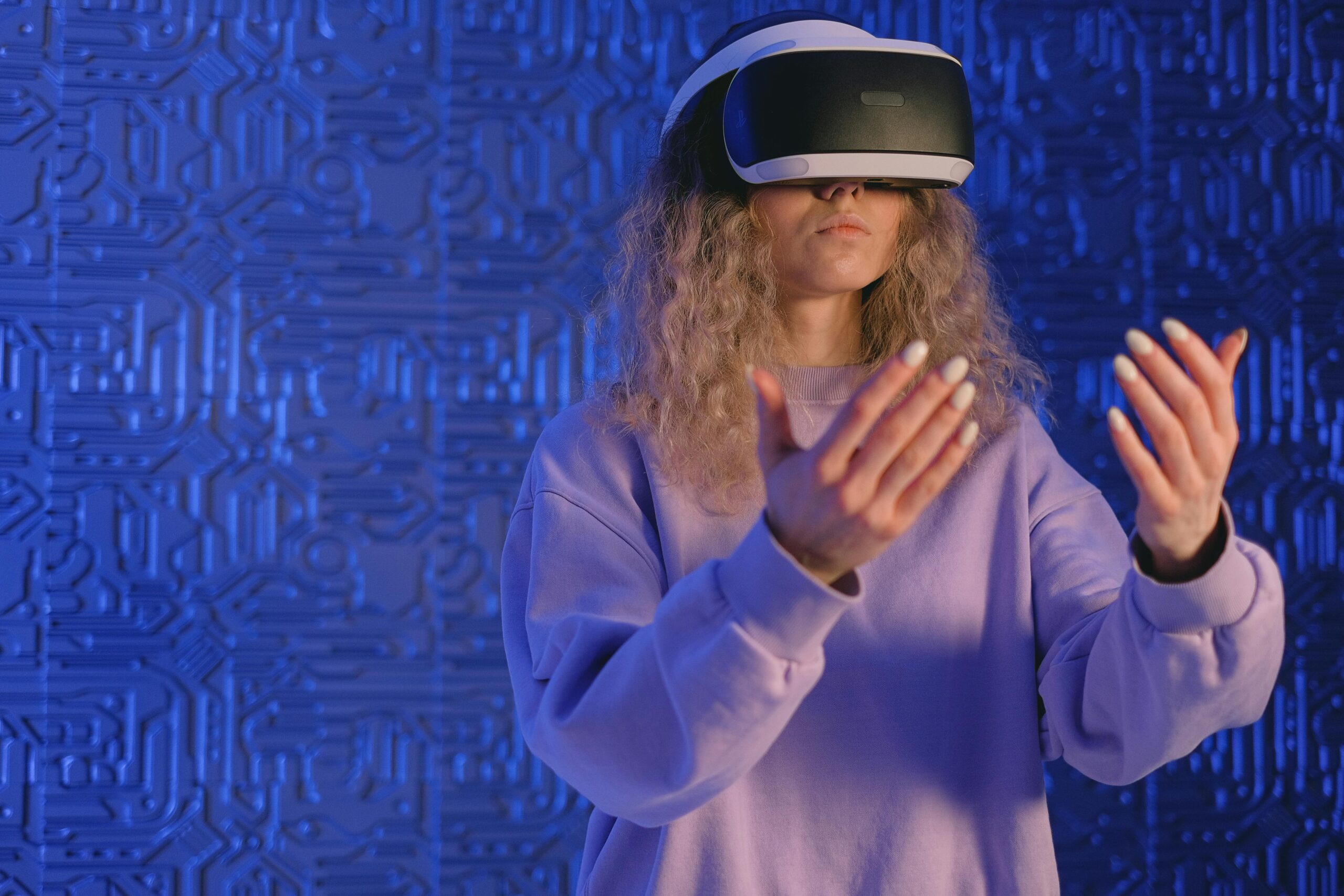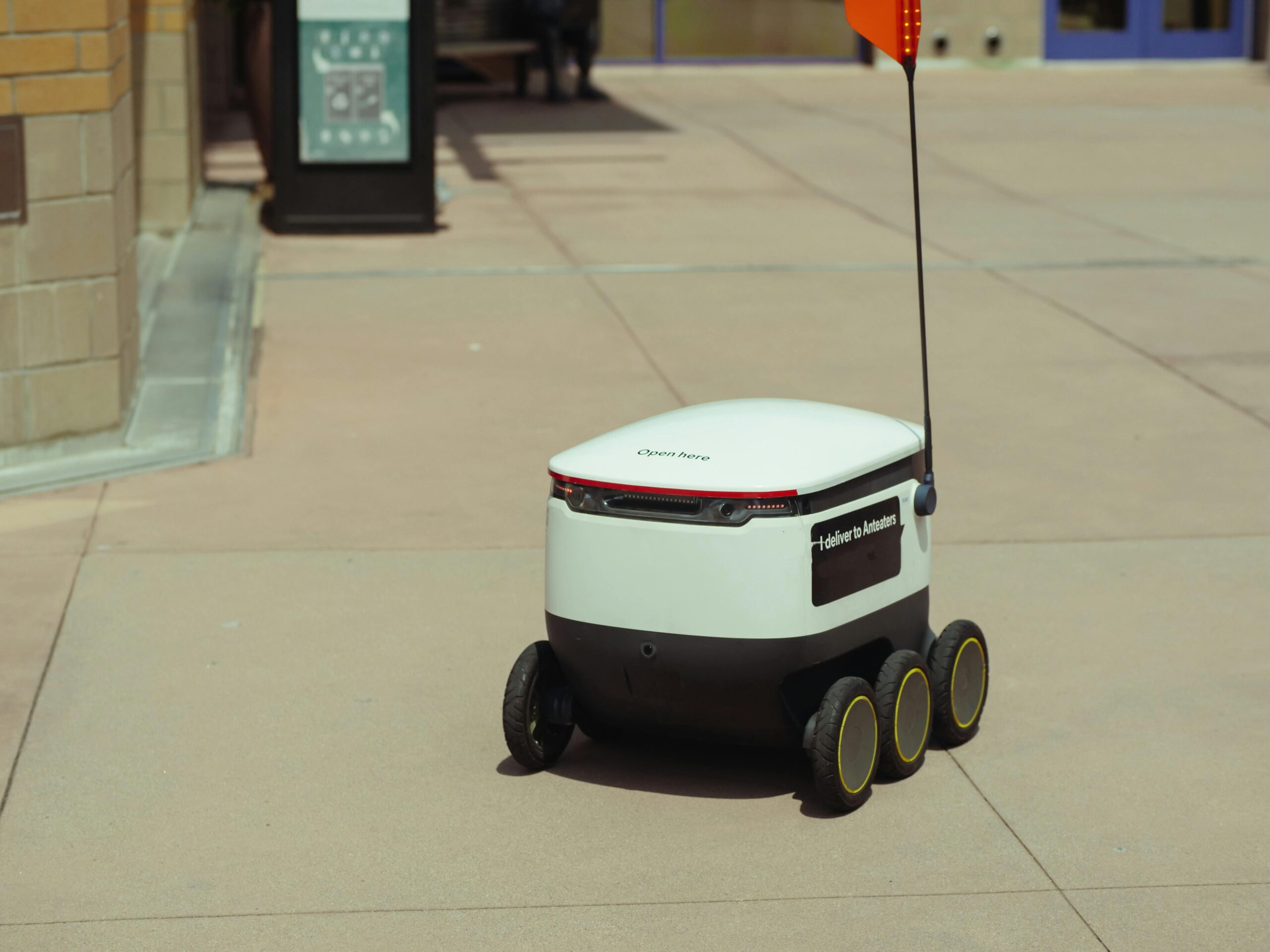
Augmented reality is no longer a futuristic concept reserved for tech enthusiasts. Today, it’s reshaping how we interact with the world around us.

The evolution from basic AR filters to sophisticated context-aware experiences represents a fundamental shift in digital interaction. By combining location data, object recognition, and real-time information processing, AR technology now creates immersive experiences that respond intelligently to our environment, transforming everyday moments into interactive adventures.
🌍 Understanding Context-Aware Augmented Reality
Context-aware AR represents the next generation of augmented reality technology. Unlike traditional AR applications that simply overlay digital content onto the physical world, context-aware systems understand where you are, what you’re looking at, and what information matters most in that specific moment.
This intelligent approach combines multiple data streams—GPS coordinates, visual recognition algorithms, sensor data, and cloud-based information—to deliver experiences that feel natural and relevant. When you point your device at a restaurant, for example, a context-aware AR app doesn’t just show its name; it displays real-time reviews, current wait times, menu highlights based on your dietary preferences, and even shows you available tables through the window.
The Three Pillars of Context-Aware AR
Context-aware augmented reality stands on three fundamental technological pillars that work in harmony to create seamless experiences:
Location Intelligence: GPS, Wi-Fi triangulation, and beacon technology combine to pinpoint your exact position with remarkable accuracy. This goes beyond simple coordinates, incorporating altitude, direction of travel, and proximity to points of interest to create a comprehensive spatial understanding.
Object Recognition: Advanced computer vision algorithms identify physical objects, landmarks, text, and even facial features in real-time. Machine learning models trained on millions of images enable instant recognition of products, buildings, artwork, plants, and countless other items.
Real-Time Data Integration: Cloud computing and edge processing deliver up-to-the-second information from databases, IoT devices, social media feeds, and other connected sources, ensuring the AR content you see is always current and relevant.
📱 Revolutionary Applications Across Industries
The practical applications of context-aware AR extend far beyond entertainment, fundamentally transforming how businesses operate and how consumers engage with products and services.
Retail and Shopping Experiences
Retail environments have become testing grounds for innovative AR implementations. Shoppers can now point their smartphones at products to instantly access detailed specifications, customer reviews, pricing comparisons, and personalized recommendations based on their purchase history and preferences.
Virtual try-on features have revolutionized fashion and cosmetics shopping. Customers can see how clothing fits their body type, how furniture looks in their living room, or how a new hair color complements their complexion—all before making a purchase. This technology reduces return rates while increasing customer satisfaction and confidence in buying decisions.
Tourism and Cultural Heritage
Context-aware AR has breathed new life into tourism and cultural exploration. Historical sites now offer time-travel experiences where visitors can see ancient buildings restored to their former glory, watch historical events unfold in the exact locations where they occurred, and interact with virtual guides who share stories in multiple languages.
Museums have embraced AR to create deeper engagement with exhibits. Pointing a device at an artifact reveals its history, shows how it was used, displays related items from other collections worldwide, and even presents 3D animations of complex processes or extinct creatures coming to life.
Navigation and Wayfinding
Traditional GPS navigation has evolved dramatically with AR overlays. Instead of glancing between a small map and the road ahead, drivers and pedestrians see directional arrows, distance indicators, and points of interest superimposed directly onto their view of the real world.
Indoor navigation has particularly benefited from this technology. Large shopping malls, airports, hospitals, and corporate campuses use AR wayfinding to guide visitors through complex layouts, highlighting the shortest route to their destination while avoiding crowded areas or temporarily closed pathways.
Education and Training
Educational institutions leverage context-aware AR to create immersive learning experiences. Biology students can examine 3D models of organs in precise anatomical context, engineering students can disassemble virtual machinery to understand internal mechanisms, and architecture students can walk through buildings that exist only as digital designs.
Professional training programs use AR simulations for high-risk scenarios without actual danger. Medical students practice surgical procedures, technicians learn to repair complex equipment, and emergency responders train for disaster situations—all in safe, controlled environments that respond realistically to their actions.
🔧 Technical Architecture Behind Context-Aware AR
Understanding the technical infrastructure powering context-aware AR helps appreciate the complexity behind seemingly effortless experiences.
Sensor Fusion and Spatial Mapping
Modern smartphones and AR devices contain an array of sensors that continuously gather environmental data. Accelerometers, gyroscopes, magnetometers, and depth sensors work together through sensor fusion algorithms to create accurate spatial maps and track device movement in three-dimensional space.
Simultaneous Localization and Mapping (SLAM) technology enables devices to build real-time maps of unknown environments while simultaneously tracking their position within those spaces. This creates the foundation for placing virtual objects that remain stable and correctly positioned as users move around them.
Computer Vision and Machine Learning
Advanced neural networks process camera feeds at remarkable speeds, identifying objects, surfaces, and spatial relationships. Convolutional neural networks (CNNs) trained on massive datasets can recognize thousands of object categories with human-level accuracy.
Edge computing brings much of this processing power directly to the device, reducing latency and enabling real-time responses without constant cloud connectivity. For more complex recognition tasks, cloud-based AI services provide additional processing power and access to regularly updated recognition models.
Cloud Infrastructure and Data Synchronization
Context-aware AR experiences rely on robust cloud infrastructure to deliver real-time data updates, synchronize content across multiple devices, and store the vast amounts of spatial and contextual information required for accurate AR placement.
Content delivery networks (CDNs) ensure fast access to 3D models, textures, and multimedia content regardless of user location. Database systems optimized for geospatial queries quickly retrieve relevant information based on user position and viewing direction.
🎯 Creating Effective Context-Aware AR Experiences
Developing successful context-aware AR applications requires careful attention to user experience principles and technical best practices.
Prioritizing Relevance Over Spectacle
The most effective AR experiences provide genuine value rather than simply showcasing technical capabilities. Every virtual element should serve a clear purpose—informing, guiding, entertaining, or facilitating a task. Cluttered interfaces with excessive information overwhelm users and defeat the purpose of augmented enhancement.
Context filtering becomes essential in information-rich environments. Smart applications display only the most relevant data based on user intent, current activity, time of day, and personal preferences, hiding secondary information until explicitly requested.
Designing for Varied Lighting and Environments
Real-world conditions vary dramatically, and AR applications must perform reliably across diverse scenarios. Object recognition algorithms should function in bright sunlight and dim interiors. Virtual content must remain visible against different backgrounds without obstructing important real-world elements.
Adaptive rendering techniques adjust virtual object brightness, transparency, and contrast based on environmental conditions. Outline rendering and strategic use of shadows help virtual elements stand out while maintaining visual coherence with the physical environment.
Minimizing Cognitive Load
Augmented reality interfaces should feel intuitive and require minimal learning. Natural interaction paradigms—pointing to select, pulling to grab, pushing to dismiss—leverage users’ real-world motor skills rather than requiring memorization of abstract commands.
Progressive disclosure reveals functionality gradually as users become more comfortable with basic features. Contextual tutorials appear exactly when needed, demonstrating specific capabilities at the moment they become relevant rather than overwhelming new users with comprehensive upfront instructions.
🚀 Emerging Trends and Future Developments
The context-aware AR landscape continues evolving rapidly, with several emerging trends poised to reshape the field in coming years.
5G Connectivity and Ultra-Low Latency
Fifth-generation cellular networks enable AR experiences that were previously impossible due to bandwidth and latency constraints. Real-time collaboration becomes seamless, with multiple users interacting with the same virtual objects simultaneously, seeing changes reflected instantly across all devices.
Cloud rendering offloads intensive graphics processing to powerful remote servers, streaming high-fidelity AR content to lightweight devices that couldn’t otherwise display such complex visuals. This democratizes access to premium AR experiences across a broader range of hardware.
AR Glasses and Wearable Devices
While smartphones currently dominate AR interaction, purpose-built glasses and headsets offer more natural, hands-free experiences. Emerging devices feature wider fields of view, longer battery life, and more sophisticated environmental understanding capabilities.
Lightweight, stylish AR glasses that resemble regular eyewear represent the holy grail of augmented reality hardware. Several manufacturers are working toward this goal, incorporating miniaturized displays, cameras, and sensors into frames indistinguishable from conventional glasses.
Persistent AR Content and Shared Experiences
Next-generation AR platforms support persistent content that remains in specific physical locations even after users leave, creating shared experiences where multiple people encounter the same virtual elements. Public art installations, collaborative work environments, and social gaming benefit enormously from this capability.
Blockchain technology and decentralized storage solutions enable community-created AR content ecosystems where users contribute virtual layers to the physical world, building rich, collaborative augmented environments that evolve organically over time.
💡 Overcoming Current Limitations and Challenges
Despite remarkable progress, context-aware AR technology faces several challenges that developers and researchers continue addressing.
Privacy and Data Security Concerns
Context-aware AR systems necessarily collect substantial amounts of personal data—location history, visual information about surroundings, interaction patterns, and personal preferences. Responsible development requires transparent data practices, robust security measures, and user control over information collection and usage.
Computer vision systems that process environmental imagery must respect privacy rights of bystanders who appear incidentally in camera feeds. Techniques like on-device processing, automatic face blurring, and privacy-preserving machine learning help balance functionality with ethical data handling.
Accuracy and Reliability
GPS accuracy varies significantly based on environmental conditions, creating challenges for precise AR placement. Urban canyons with tall buildings, dense forests, and indoor environments can reduce positioning accuracy to meters rather than centimeters.
Hybrid positioning systems combine GPS with visual odometry, Wi-Fi fingerprinting, and beacon technology to maintain accuracy across diverse scenarios. Continuous improvements in sensor quality and fusion algorithms gradually narrow the gap between current capabilities and the centimeter-level precision required for truly seamless AR integration.
Battery Life and Processing Power
Context-aware AR applications demand substantial computational resources, continuously processing camera feeds, sensor data, and network communication. This intense activity drains smartphone batteries quickly, limiting practical session durations.
Optimization techniques including selective processing, efficient algorithm design, and intelligent duty cycling extend battery life without compromising experience quality. Hardware manufacturers increasingly incorporate dedicated neural processing units and improved power management specifically designed for AR workloads.

🌟 Building the Augmented Future
Context-aware augmented reality represents far more than incremental improvement over previous technologies. It fundamentally reimagines human-computer interaction, dissolving boundaries between digital information and physical experience.
As recognition algorithms become more sophisticated, location accuracy improves, and real-time data sources proliferate, AR experiences will grow increasingly natural and indispensable. We’re approaching a future where digital information seamlessly integrates with physical reality, available precisely when and where we need it without conscious effort.
The transformation extends beyond individual experiences to reshape entire industries. Retail, education, healthcare, entertainment, and manufacturing already demonstrate profound changes driven by context-aware AR adoption. Organizations that embrace this technology early gain significant competitive advantages through enhanced customer experiences, operational efficiency, and innovative service delivery.
For developers, designers, and technologists, context-aware AR presents extraordinary opportunities to create genuinely transformative applications. The most successful implementations will be those that prioritize user value over technical showmanship, respect privacy while delivering personalization, and design experiences that feel magical precisely because they work so naturally.
The augmented future isn’t distant speculation—it’s emerging now, one context-aware experience at a time. By understanding the technologies powering this revolution and embracing the principles that make AR experiences truly valuable, we can collectively build a future where digital enhancement enriches rather than distracts from authentic human experience. The power to transform reality is increasingly accessible, waiting for creative minds to unlock its full potential. 🚀