The digital world is evolving beyond sight and sound, entering a realm where touch becomes the bridge between virtual and physical reality. Haptic feedback systems are transforming how we interact with technology, creating sensations that make digital experiences feel remarkably tangible.

From smartphones vibrating with precision to virtual reality controllers simulating texture, haptic technology is reshaping our relationship with digital devices. This revolutionary approach to human-computer interaction is no longer science fiction—it’s becoming an essential component of how we experience games, navigate interfaces, and connect with digital content in profoundly meaningful ways.
🔍 Understanding the Science Behind Haptic Feedback
Haptic feedback, derived from the Greek word “haptesthai” meaning “to touch,” refers to technology that creates tactile sensations through forces, vibrations, or motions. Unlike passive touch screens, haptic systems actively communicate with users through the sense of touch, creating a bidirectional conversation between human and machine.
The technology operates through various mechanisms, including eccentric rotating mass (ERM) motors, linear resonant actuators (LRAs), and advanced piezoelectric actuators. Each system delivers different levels of precision and complexity, from simple vibration alerts to sophisticated sensations that mimic specific textures or resistance.
Modern haptic systems can generate hundreds of distinct tactile sensations, allowing developers to craft intricate feedback patterns that correspond to specific digital actions. This granular control enables experiences where pressing a virtual button feels distinctly different from sliding a toggle or scrolling through content.
📱 The Evolution of Mobile Haptic Technology
The journey of haptic feedback in mobile devices began with simple vibration motors that provided basic notifications. Early implementations were crude, offering little variation beyond on-off binary feedback that served primarily as alert mechanisms for incoming calls or messages.
Contemporary smartphones have revolutionized this landscape with sophisticated haptic engines capable of producing nuanced tactile responses. Premium devices now feature precision-engineered Taptic Engines or similar systems that deliver localized, varied feedback corresponding to specific interface interactions.
This evolution has transformed typing experiences, gaming interactions, and navigation gestures. When users tap a keyboard key on modern devices, the haptic response provides confirmation that feels remarkably similar to pressing a physical button, reducing errors and increasing confidence in digital interactions.
The Impact on User Interface Design
Haptic feedback has fundamentally altered how designers approach user interfaces. The addition of tactile dimensions allows for more intuitive navigation systems where users can “feel” their way through menus without constantly looking at screens.
Designers now consider haptic responses as integral design elements rather than afterthoughts. Each swipe, tap, or long-press can be accompanied by carefully calibrated feedback that reinforces visual cues and creates cohesive multisensory experiences.
🎮 Gaming Experiences Transformed by Haptic Innovation
The gaming industry has emerged as a primary beneficiary and driver of haptic technology advancement. Modern gaming controllers feature advanced haptic systems that simulate everything from weapon recoil to environmental textures, creating unprecedented levels of immersion.
Sony’s PlayStation 5 DualSense controller exemplifies this revolution with adaptive triggers and sophisticated haptic feedback that dynamically adjusts based on in-game actions. Players can feel the tension of drawing a bow, the texture of different surfaces, or the impact of raindrops with remarkable fidelity.
Mobile gaming has similarly embraced haptic capabilities, with developers integrating tactile feedback to enhance gameplay. Racing games simulate engine vibrations and terrain changes, while action titles provide impact feedback that makes virtual combat feel visceral and immediate.
Virtual Reality and the Haptic Frontier
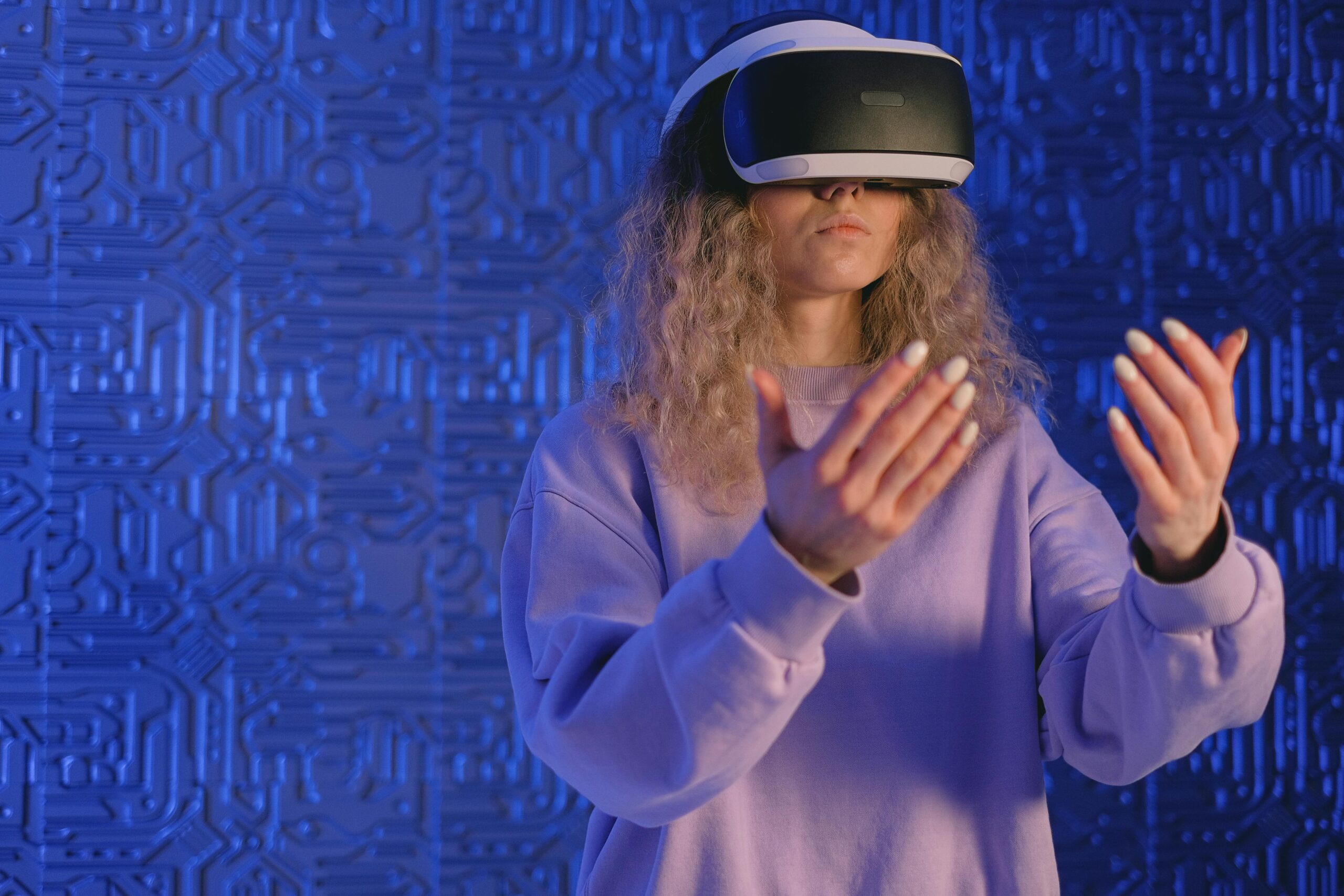
Virtual reality represents the ultimate testing ground for haptic technology, where convincing touch sensations become crucial for believable immersive environments. VR controllers equipped with advanced haptics allow users to “feel” virtual objects, creating presence that visual and audio cues alone cannot achieve.
Emerging haptic gloves and full-body suits promise even more comprehensive tactile experiences, enabling users to sense object weight, texture, and temperature in virtual spaces. These developments blur the boundaries between physical and digital realities in unprecedented ways.
💼 Professional Applications Beyond Entertainment
Haptic technology extends far beyond gaming and entertainment, finding critical applications in professional fields where precise tactile feedback delivers tangible benefits. Medical training simulations utilize haptic systems to replicate surgical procedures, allowing students to practice techniques with realistic resistance and feedback before working with actual patients.
Automotive industries incorporate haptic feedback into vehicle interfaces, creating safer driving experiences where drivers receive tactile confirmations without diverting visual attention from roads. Dashboard controls provide distinctive feedback patterns that allow intuitive operation without requiring users to look away from traffic.
Remote operation systems for industrial machinery and robotics leverage haptic feedback to give operators tactile awareness of distant environments. Engineers controlling robotic arms can feel resistance, pressure, and texture, enabling delicate operations that would be impossible with visual feedback alone.
🔬 Technical Innovations Driving Haptic Advancement
Recent technological breakthroughs have expanded what’s possible with haptic systems. Ultrasonic haptic technology creates tactile sensations in mid-air without physical contact, using focused ultrasound waves to generate pressure points on skin surfaces that users perceive as touch.
Electroactive polymers represent another frontier, offering materials that change shape or stiffness in response to electrical signals. These artificial muscles enable dynamic surface textures that physically transform, creating tactile experiences impossible with traditional vibration motors.
Machine learning algorithms now optimize haptic responses in real-time, analyzing user behavior to adjust feedback intensity and patterns for maximum effectiveness. This adaptive approach ensures haptic sensations remain noticeable without becoming intrusive or fatiguing.
The Role of High-Definition Haptics
High-definition haptic technology represents the cutting edge of tactile feedback, capable of rendering complex sensations with spatial precision. These systems can simulate specific textures like fabric weaves, wood grain, or metallic surfaces with remarkable accuracy.
HD haptics utilize wideband actuators that generate vibrations across broader frequency ranges than conventional systems. This expanded range allows for richer, more nuanced sensations that more closely approximate real-world tactile experiences.
🌐 Accessibility and Inclusive Design Opportunities
Haptic feedback holds transformative potential for accessibility, offering alternative communication channels for individuals with visual or hearing impairments. Tactile interfaces can convey information that would otherwise require sight or sound, creating more inclusive digital experiences.
Navigation applications employ haptic feedback to guide visually impaired users through physical spaces, using vibration patterns to indicate direction changes or obstacles. These systems provide discreet, intuitive guidance that enhances independence and confidence.
Educational applications leverage haptics to make abstract concepts tangible for learners with diverse needs. Mathematical visualizations, scientific simulations, and historical reconstructions become accessible through touch, opening new pathways for understanding complex subjects.
📊 Market Trends and Industry Adoption
The global haptic technology market is experiencing exponential growth, driven by increasing demand for immersive experiences across consumer electronics, automotive, healthcare, and industrial sectors. Market analysts project continued expansion as haptic systems become standard features rather than premium additions.
Major technology companies are investing heavily in haptic research and development, recognizing tactile feedback as a differentiating factor in competitive markets. Patents related to haptic innovations have surged, indicating intense competition to develop superior tactile technologies.
Consumer expectations are evolving accordingly, with users increasingly regarding haptic feedback as essential rather than optional. Devices lacking sophisticated tactile responses risk feeling dated compared to competitors offering rich haptic experiences.
⚡ Challenges and Limitations in Current Systems
Despite remarkable progress, haptic technology faces significant challenges that constrain broader adoption and effectiveness. Power consumption remains a critical concern, as generating tactile feedback requires energy that impacts battery life in mobile devices.
Standardization across platforms and devices presents another obstacle, with inconsistent haptic implementations creating fragmented user experiences. Developers must account for wide variations in haptic capabilities when designing cross-platform applications.
Perceptual limitations also constrain what haptic systems can effectively communicate. Human tactile perception varies significantly between individuals, and creating universally effective feedback patterns requires careful calibration that balances subtlety with noticeability.
Overcoming Technical Barriers
Researchers are developing more energy-efficient actuators that deliver powerful haptic feedback while minimizing power draw. Advanced materials and optimized control algorithms reduce energy requirements without compromising tactile quality.
Industry collaboration efforts aim to establish haptic standards that ensure consistent experiences across devices. These initiatives seek to create common frameworks for haptic design that simplify development while maintaining creative flexibility.
🚀 Future Directions and Emerging Possibilities
The future of haptic technology promises even more remarkable innovations that will further dissolve boundaries between physical and digital experiences. Researchers are exploring neural interfaces that directly stimulate tactile perception centers in the brain, potentially creating perfect haptic illusions indistinguishable from real touch.
Ambient haptic environments represent another frontier, where entire spaces generate tactile sensations through furniture, walls, and floors. These immersive environments could transform entertainment venues, training facilities, and therapeutic spaces.
Wearable haptic devices are becoming more sophisticated and less obtrusive, with textiles incorporating haptic elements that provide feedback through clothing. These invisible interfaces could enable constant connectivity with digital systems without requiring handheld devices.
The Convergence of Sensory Technologies
Future systems will likely integrate haptics with other sensory technologies, creating holistic multisensory experiences that engage sight, sound, and touch simultaneously. This convergence will enable digital experiences that approach the richness and complexity of physical reality.
Artificial intelligence will play an increasingly important role in personalizing haptic experiences, learning individual preferences and sensitivities to optimize feedback for each user. These adaptive systems will deliver tactile sensations that feel natural and appropriate across diverse contexts.
🎯 Practical Implementation for Developers and Designers
For developers seeking to integrate haptic feedback into applications, understanding device capabilities and user contexts is essential. Effective haptic design requires restraint—overusing tactile feedback creates fatigue and diminishes impact, while thoughtful implementation enhances experiences without overwhelming users.
Testing haptic implementations across diverse devices ensures consistent experiences that adapt to varying capabilities. Designers should provide options for users to customize haptic intensity or disable feedback entirely, respecting individual preferences and accessibility needs.
Documentation and development tools for haptic implementation continue improving, making tactile feedback more accessible to developers without specialized expertise. Platforms increasingly offer simplified APIs that abstract technical complexities while providing creative control.

💡 The Transformative Potential of Touch Technology
Haptic feedback systems represent more than incremental improvements to existing interfaces—they fundamentally expand how humans interact with digital information. By engaging our tactile senses, these technologies create emotional connections and intuitive understanding that purely visual or auditory interfaces cannot achieve.
As haptic technology becomes more sophisticated and ubiquitous, we’re witnessing the emergence of a truly multisensory digital landscape. The revolution in touch technology is not just about making digital experiences more realistic—it’s about making them more human, more accessible, and more deeply connected to how we naturally perceive and interact with the world.
The journey from simple vibration motors to sophisticated haptic ecosystems demonstrates technology’s remarkable ability to extend human capabilities and create new forms of expression. As we continue unleashing the power of haptic feedback, we’re not just revolutionizing touch—we’re redefining what it means to experience the digital world.